


What is Our Sourdough Boulès Prep and Baking Process?

A good sourdough boulè doesn’t rush. It has plans. It has a calendar. It has a little wild yeast party to attend before it shows up at your door looking crusty, golden, and dramatically delicious.
That’s why our sourdough boulès are made to order and need to be ordered at least 24 hours before delivery. Not because we’re trying to be fancy, although the loaf does look like it belongs in a cottage kitchen photo shoot. It’s because real sourdough takes time to ferment, rise, develop flavor, and bake into that chewy, tangy, crackly-crusted round loaf people start “just slicing a little piece” from until half the boule mysteriously vanishes.
Let’s talk about what sourdough is, why people love it, how the prep and bake process works, and what flavors make our boulès worth planning ahead for.

What Is Sourdough?
Sourdough is bread made with a live fermented starter instead of only commercial yeast.
That starter is usually a simple mixture of flour and water that captures naturally present wild yeast and beneficial bacteria. Over time, it becomes bubbly, active, and ready to help dough rise. Think of it as a tiny bread engine. A very needy bread engine, but still.
Unlike quick-rise breads, sourdough gets its flavor and leavening from fermentation. The starter eats the natural sugars in flour and creates gases that help the dough rise. At the same time, organic acids develop, giving sourdough its signature tang and deeper flavor.
A sourdough boulè is the round, rustic version of that bread. The word “boule” comes from the French word for “ball,” which makes sense because this loaf is round, hearty, and ready to be the main character of your dinner table.
A well-made sourdough boulè usually has:
A crisp, caramelized crust
A chewy, open crumb inside
A light tangy flavor
A deep, toasty aroma
Enough personality to make regular sandwich bread feel like it needs a vacation
It’s simple bread, but it’s not basic bread. There’s a difference.
Why Sourdough Tastes Different From Regular Bread
Regular yeasted bread can be delicious, but it often relies on a faster rise. That means less fermentation time and, usually, a milder flavor.
Sourdough takes the scenic route.
During fermentation, the dough develops more complex flavors. The crust browns beautifully in the oven, the inside becomes tender and slightly chewy, and the whole loaf smells like someone found the “comfort” setting on the oven.
The longer fermentation also affects texture. A sourdough boulè isn’t supposed to feel fluffy like a hamburger bun. It’s more substantial. It has pull. It has chew. It makes soup better, butter happier, and sandwiches feel like they’ve upgraded to first class.
This is why sourdough has such a loyal fan base. People don’t just eat it. They talk about it. They compare crumbs. They tap the crust. They say things like, “Listen to that crackle,” and somehow everyone understands.
The Benefits of Sourdough
Sourdough has a lot going for it beyond taste. No, it’s not magic. It won’t fold your laundry or remind you where you put your keys. But it does bring some real perks to the table.
It has rich, naturally developed flavor
The long fermentation creates flavor you can’t fake in a hurry. A good sourdough boulè has layers: mild tang, toasted wheat, a little nuttiness, and that warm bakery aroma that makes everyone suddenly appear in the kitchen.
It also pairs with just about everything:
Butter and jam
Olive oil and herbs
Soups and stews
Charcuterie boards
Eggs
Roasted vegetables
Grilled cheese
Leftover pasta, if you’re living your best life
It may be easier for some people to digest
Because sourdough ferments over time, some starches and proteins in the flour begin to break down before baking. Some people find true sourdough easier to digest than standard bread.
That said, sourdough is still bread made with wheat flour unless otherwise stated. It is not gluten-free, and anyone with celiac disease, a wheat allergy, or a medical dietary restriction should avoid it unless their healthcare provider says otherwise.
Translation: sourdough is special, but it is not a wizard in a cape.
It keeps well for a real bread
The natural acidity in sourdough can help the bread stay enjoyable longer than many quick breads. It won’t last forever, of course. It is bread, not a museum artifact.
To keep your boulè at its best, store it cut-side down on a cutting board for a day or so, or wrap it in a breathable bag. Avoid the refrigerator if possible, since it can dry bread out faster. If you won’t finish it soon, slice and freeze it. Future you will be thrilled, especially when toast cravings attack.
If you want to enjoy your sourdough as though you baked it yourself, place the entire boule under running water, quickly getting it entirely wet and place it directly onto the middle rack of an oven preheated to 350*. 15 minutes later, pull it out of the oven with a crisp crust and bread heated through. You may also refresh a loaf from the freezer in this same manner after it has been thawed.
It makes meals feel more complete
A sourdough boulè can turn a basic meal into something cozy and satisfying. Soup becomes dinner. Salad gets backup. Breakfast gets upgraded. Snack time becomes “I’m just having artisanal toast,” which sounds much more responsible than “I ate three slices standing at the counter.”

Why Our Sourdough Boulès Need 24 Hours
Here’s the big thing: our sourdough boulès are made to order.
That means we don’t just pull a random loaf from a lonely bread shelf and send it on its way. Your order starts a process. The starter needs to wake up. The dough needs to mix, rest, ferment, shape, proof, and bake. Then it needs enough time to cool properly so the inside sets and the crust stays glorious.
That’s why orders must be placed at least 24 hours prior to delivery.
Sourdough is not a last-minute bread. It’s not “Oh no, guests are coming in 30 minutes” bread. It’s “I planned ahead and now I get the good stuff” bread.
The 24-hour window gives the dough time to ferment the right way. Skip that time, and you lose the flavor and texture that make sourdough worth ordering in the first place.
If regular bread is a microwave burrito, sourdough is Sunday dinner. Both have a place in life, but only one makes the kitchen smell like happiness.
A Typical Sourdough Prep and Bake Process
Every baker has their own rhythm, but a true sourdough boulè Prep and baking process usually looks like this.
The starter gets fed
The sourdough starter needs to be active and bubbly before it can raise bread. Feeding it with flour and water gives the wild yeast what it needs to grow strong.
A healthy starter looks lively. It bubbles. It rises. It smells pleasantly tangy, a little like yogurt, apples, or fresh flour. If it looks like pancake batter with ambition, that’s a good sign.
The dough is mixed
Once the starter is ready, it joins flour, water, and salt. Some recipes include a short rest before salt is added, which helps the flour hydrate and can make the dough easier to handle.
At this stage, the dough is shaggy and sticky. Do not judge it. We all look rough at the beginning of a transformation.
The dough rests and strengthens
Instead of heavy kneading, many sourdough methods use a series of stretch-and-folds. The dough is gently pulled and folded over itself every so often.
This builds structure so the bread can hold its shape. It also helps create that chewy crumb sourdough fans love.
The dough ferments
This is where the flavor really develops. During bulk fermentation, the starter works through the dough, creating lift and tang.
The dough slowly becomes smoother, puffier, and more elastic. Timing can vary because sourdough responds to temperature, flour, hydration, and starter strength. It’s alive, which means it has opinions.
The boulè is shaped
After fermentation, the dough is gently shaped into a round loaf. The goal is to build surface tension so the boulè rises up instead of spreading out like a sleepy pancake.
Then it rests again for a final proof.
The loaf is scored and baked
Right before baking, the top is scored with a blade. That cut gives steam a place to escape and helps control how the loaf expands in the oven.
Then comes the bake. High heat creates oven spring, browns the crust, and gives the loaf that deep golden finish. The crust crackles as it cools, which is basically bread applause.

What Flavors Do We Offer in Our Sourdough Boulè?
A classic sourdough boulè is already a beautiful thing. But flavors? That’s where things get fun.
We offer a variety of sourdough boule options, including Traditional, Olive with Thyme, Jalapeño Cheddar, Cranberry with White Chocolate, and Garlic with Parmesan. These comforting classics and flavorful variations are perfect for different meals, spreads, and snacks.
Here are the kinds of sourdough flavors people love and how to enjoy them.
Traditional sourdough
This is the go-to loaf. Tangy, crusty, chewy, and ready for anything.
Use it for:
Toast with butter
Sandwiches
Soup dipping
Garlic bread
Bread boards
Late-night kitchen wandering
Traditional sourdough is the loaf that says, “I brought range.”
Garlic and Parmesan sourdough
Savory Parmesan and garlic bring big dinner energy. This one loves pasta, roasted chicken, tomato soup, and olive oil dipping.
If classic sourdough wears a cozy sweater, garlic parmesan sourdough shows up with a dinner reservation and excellent stories.
Cranberry and White Chocolate sourdough
Dried cranberries and white chocolate baked into sourdough add richness and sweet goodness. It’s great toasted, served with chili, or turned into a grilled cheese that deserves its own tiny parade.
A cheese sourdough slice under the broiler? Dangerous. Delicious. Possibly gone before it reaches a plate.
Jalapeño cheddar sourdough
This one brings a little heat and a lot of personality. Jalapeño cheddar sourdough is perfect with eggs, barbecue, soups, or anything that could use a bold sidekick.
This is our kids' favorite; they butter it and eat it plain before we can make any more creations with it.
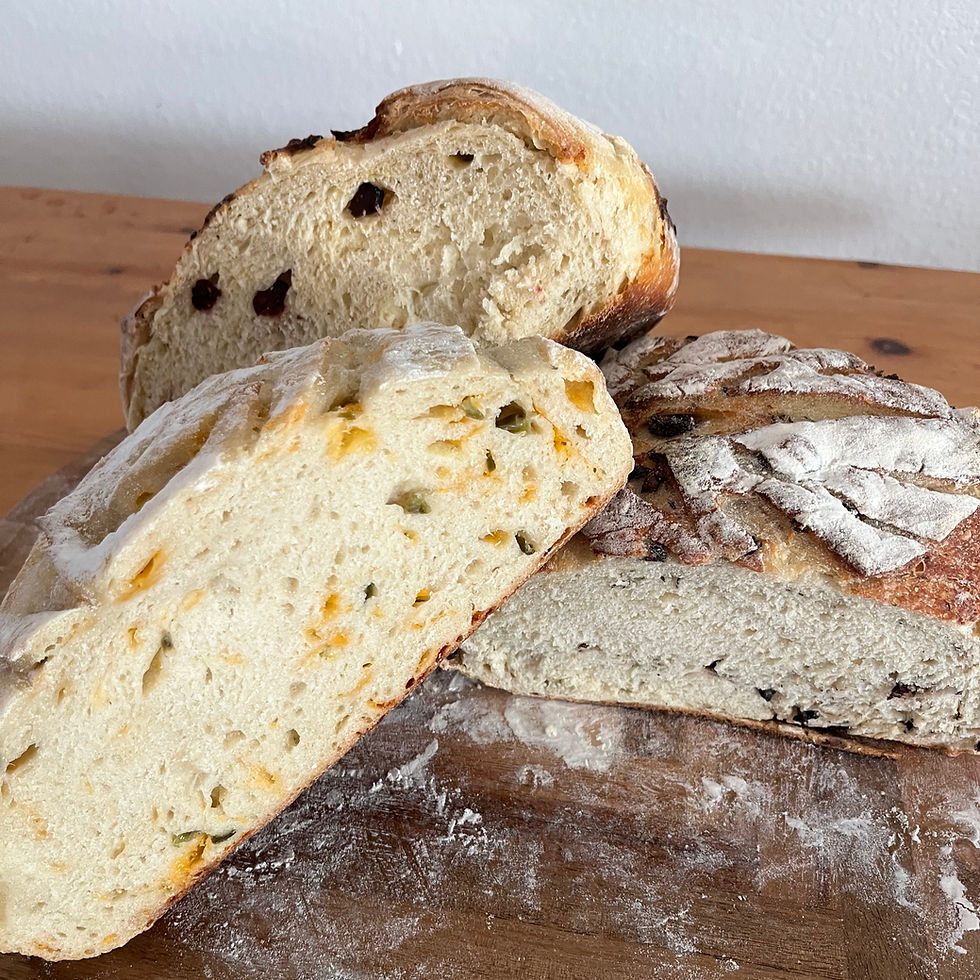
Olive and Thyme sourdough
It's stuffed with a variety of olives and freshly picked thyme and is the perfect complement to any Italian meal that may need a little extra elevation.
This sourdough boulè is basically a port key that transports you straight to Sicily.
Cinnamon brown sugar or sweet-style sourdough
A lightly sweet sourdough is made for breakfast and snack time. Toast it, butter it, maybe add a little cream cheese if you’re feeling fancy.
This is the loaf that makes coffee feel complete.
How to Serve a Sourdough Boulè Without Overthinking It
You do not need a culinary degree to enjoy sourdough. You need a knife, maybe butter, and the emotional maturity to stop at one slice. Good luck with that last part.
Here are easy ways to serve it.
For breakfast
Toast with butter, jam, honey, avocado, eggs, or cream cheese.
For dinner
Serve with soup, stew, pasta, roasted meats, or salad.
For lunch
Use thick slices for sandwiches, melts, or open-faced toast.
For gatherings
Slice for a bread board with cheeses, dips, spreads, and olive oil.
If your boulè is very fresh, let it cool fully before slicing. Cutting hot sourdough too early can make the inside gummy. It smells amazing, yes. It tests human patience, absolutely. But waiting helps the texture finish properly.
How to Refresh Your Sourdough Boulè
If your loaf starts to firm up after a day or two, don’t panic. Sourdough has comeback skills.
Try this:
quickly douse the loaf under running water.
Place it directly on the middle rack of a preheated oven.
Warm it in a 350°F oven for 10-15 minutes.
Let it sit briefly before slicing.
The crust perks back up, the inside softens, and suddenly yesterday’s bread is ready for round two.
You can also toast slices straight from the freezer. That’s one of the best sourdough tricks. Slice before freezing, then grab what you need. Future breakfast just got easier.

Planning Ahead Is the Whole Point
Ordering sourdough 24 hours ahead isn’t a hassle. It’s part of what makes the bread good.
Fermentation needs time. Flavor needs time. That gorgeous crust and chewy center need time. If sourdough could talk, it would probably say, “Please respect my process,” then ask for a better knife.
When you order ahead, you’re giving your boulè the best chance to become what it should be: flavorful, fresh, rustic, and ready for your table.
If you’re ready to bring home a made-to-order loaf, order your sourdough boulè here and give it at least 24 hours before delivery so the fermentation magic can happen.
A fresh sourdough boulè is simple food done with care. It’s crusty on the outside, tender inside, and wildly good with butter. Plan ahead, pick your flavor, and prepare for that first slice to disappear suspiciously fast.

Comments